
 0
0



- Home
- Neuro Check

Brain Medical Checkup
Most people only think about scheduling a brain checkup when they encounter dementia, chronic insomnia, or a significant impact on daily functioning. However, changes in brain function often occur quietly long before a disease fully manifests. Decreased attention span, reduced memory efficiency, diminished learning capabilities, brain fog, declining sleep quality, slowed reflexes, and emotional fluctuations are all critical warning signs that warrant early attention.
Long COVID may also present cognitive impairments, commonly referred to as "brain fog." Furthermore, if early-onset dementia is linked to inherited genetic variations, symptoms can appear before the age of 65. Therefore, it is essential to prioritize brain health proactively rather than waiting for severe symptoms to develop.
A brain medical checkup goes beyond standard brain CT scans. It establishes a comprehensive foundation for brain health management across four key dimensions: brain structural integrity, cortical functionality, underlying predisposition, and environmental risk sources. The objective is not merely to determine whether a disease is currently present, but to help you identify early on what stage your brain function is in, what future risks require proactive management, and which issues can be addressed before significant deterioration occurs.
"You don't have to wait for insomnia to worsen or memory to decline before you start caring about your brain health!"
Checkup Features
Centering on neurological and psychiatric expertise, this evaluation integrates high-resolution specialized CT scans, cortical function assessments, dementia genetic testing, heavy metal screenings, nutrient concentration monitoring, and brain function risk analysis. It conducts a thorough brain health assessment across multiple levels, including imaging, functionality, physical constitution, nutrition, environment, and genetics.
Core Advantages
The Clinic team has long specialized in advanced brain medical research. Through a multidisciplinary integrated assessment, we help you clearly understand the current stage of your brain function, identify actionable brain preservation strategies, pinpoint critical future risks, and determine which issues require early medical intervention. This allows you to establish personal baseline brain health data rather than reacting passively after significant cognitive decline has occurred.
Checkup Process
- 01
Initial Consultation & Medical History Review
- Physicians and our professional team review your sleep quality, memory and attention performance, family history, chronic medical conditions, emotional stress levels, lifestyle habits, occupational exposures, and past medical history.
- 02
Brain Structure & Function Examination
- High-resolution specialized CT scans, cortical function assessments, and other relevant diagnostics are arranged based on individual needs to establish your current brain structure and functional baselines.
- 03
Predisposition & Risk Factor Analysis
- We integrate dementia genetic testing, brain function risk profiling, heavy metal screenings, and necessary laboratory panels to evaluate brain health risks from both genetic and environmental perspectives.
- 04
Integrated Results & Health Recommendations
- Clinicians consolidate data from imaging, cortical function assessments, genetic predispositions, and risk factor evaluations to deliver personalized health recommendations, follow-up directions, and necessary medical pathways. For abnormal values or areas requiring ongoing monitoring, a dedicated case manager will facilitate a structured follow-up plan—including schedule reminders, diagnostic recommendations, and seamless medical referrals—ensuring your brain health management extends into a systematic, long-term care program rather than just a one-time checkup.

Auditory System Checkup
Most people assume that a hearing test is only necessary when hearing loss becomes noticeably severe. In reality, many pathological changes in the auditory system begin long before clear symptoms emerge. High-frequency hearing decline, cumulative noise damage, genetic predispositions, metabolic abnormalities, heavy metal exposure, and variations in nerve conduction or inner ear microcirculation can progress without early warning signs, gradually eroding future hearing quality.
An auditory system checkup goes beyond assessing your current hearing thresholds. It focuses on evaluating auditory function, genetic predisposition, and risk sources to build a thorough foundation for auditory health, ensuring that prevention, tracking, and subsequent medical care are completely data-driven.
"The greatest danger isn't losing your hearing entirely; it's never realizing that it is slipping away."
Checkup Features
The purpose of an auditory system checkup is not just to produce an audiogram that tells you whether you need a hearing aid, but to comprehensively evaluate the multi-factorial elements that impact your hearing. Assessments can be tailor-fit to individual needs and include: comprehensive full-frequency audiometry to identify early-stage degeneration or noise-induced trauma; hearing-related genetic testing to uncover familial, congenital, or accelerated hearing decline risks; auditory risk profiling across lifestyle, occupational exposure, chronic illnesses, medication use, sleep patterns, and circulatory status; as well as heavy metal and environmental exposure assessments to rule out chronic environmental toxicity. This holistic evaluation shifts the focus from simply detecting current impairments to mapping out future risks that require early-stage management.
Core Advantages
Auditory health should be prioritized before functional deficits become irreversible. This screening is highly recommended for individuals who experience prolonged noise exposure, use headphones frequently, have a family history of hearing loss, suffer from tinnitus, ear fullness, auditory hypersensitivity, or autophony (hearing an echo of one's own voice), present with comorbid metabolic syndrome (the "three highs") or autoimmune issues, have a history of heavy metal or toxic occupational exposures, have taken potentially ototoxic medications, or simply wish to establish a baseline before reaching middle age. The Yuan Jing Clinic team possesses extensive expertise in auditory health research. Through an integrated multi-specialty approach, we clarify exactly what stage your auditory function is in, identify primary risk factors, and determine optimal windows for early intervention, keeping you ahead of progressive hearing damage.
Checkup Process
- 01
Initial Consultation & Medical History Review
- Our clinical team analyzes your presenting symptoms, family medical history, occupational patterns, lifestyle habits, past illnesses, and pharmaceutical use.
- 02
Auditory Function Examination
- Based on your initial consultation, a personalized full-frequency audiometry evaluation and related functional assessments are carried out to establish your current auditory baseline performance.
- 03
Predisposition & Risk Factor Analysis
- Customized profiles are compiled by integrating hearing-specific genetic tests, risk factor modeling, heavy metal toxicological screenings, and other clinically indicated panels.
- 04
Integrated Results & Health Recommendations
- Physicians synthesize data from your auditory function profiles, genetic background, and environmental risks to provide distinct health strategies, tracking schedules, and clinical interventions. For parameters requiring ongoing vigilance, case managers establish a structured longitudinal tracking plan—supplying follow-up reminders, diagnostic guidance, and advanced care coordination—transforming routine checks into systematic, lifelong auditory care.
Tinnitus/Brain Tinnitus Measurement & Analysis
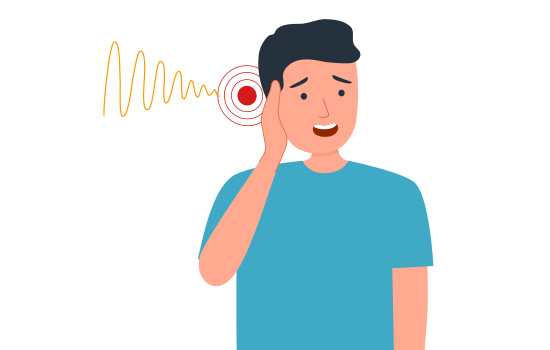
The reason tinnitus and brain tinnitus are notoriously difficult to treat is not because they are unmanageable, but because their underlying etiologies are deeply obscured. For most patients, tinnitus is an isolated acoustic perception that only they can hear. For physicians, resolving this requires meticulous, deep-dive analysis to systematically deconstruct the pathogenic architecture driving the sound. The diagnostic testing at Yuan Jing Clinic is not a generic physical exam, nor is it limited to basic audiometry. It is a sophisticated clinical evaluation built specifically around precision diagnostics, targeted therapeutic planning, and preventive medicine. Our mission is to go beyond merely confirming that you "have tinnitus"—we aim to uncover exactly where the sound originates, why it developed, how it can be clinically treated, and how to optimize your overall auditory function going forward.
"The true distress comes not from the sound in your ears, but from the inability to find its source."
Checkup Features
We utilize multi-dimensional analysis to isolate complex acoustic sources. The primary focus of our tinnitus and brain tinnitus diagnostic battery is to determine: exactly what type of sound you are perceiving, the direct source of these sounds, whether there is concurrent brain tinnitus or central auditory processing dysfunction, the relative contribution of central neurological components, which factors represent the primary pathology versus secondary interferences, and whether your tinnitus can be effectively masked.
Core Advantages
We establish a highly rigorous interpretive baseline through comprehensive profiling, allowing us to map out a clear, targeted treatment strategy and eliminate trial-and-error medicine. The entire diagnostic process requires no injections, no oral medications, no contrast agents, and no fasting—preventing any risk of symptom exacerbation during testing. Executed as a one-stop clinical pathway by three medical specialists, it saves you from navigating multiple hospital departments while ensuring cross-disciplinary, joint diagnostic interpretation.
Checkup Process
- 01
Initial Assessment
- Physicians and clinical specialists evaluate your sleep architecture, memory and concentration parameters, family medical charts, chronic medical conditions, neuro-emotional stress loads, lifestyle patterns, vocational hazards, and prior medical history.
- 02
Systemic Diagnostic Mapping
- Formulated around individual clinical presentations and preliminary imaging data, we arrange a complete tinnitus measurement/brain tinnitus analysis battery paired with specific auditory, neurological, circulatory, and hematological panels.
- 03
Integrated Clinical Interpretation
- All clinical metrics and diagnostic data undergo extensive cross-analysis to pinpoint the definitive origin pathways and pathological structure of your tinnitus.
- 04
Therapeutic Strategy Formulation
- Based on diagnostic findings and the current staging of your condition, we construct highly directional, customized recommendations for ongoing treatment.
This comprehensive systemic evaluation spans approximately two working days and requires booking at least one month in advance.
Fee Schedule
*This examination is an individualized, self-pay medical service. It is not covered by National Health Insurance (NHI), and our facility is a non-NHI contracted private clinic. The current recommended fee for the comprehensive Tinnitus Measurement & Analysis is NTD 172,535. The final actual cost remains subject to the latest official announcements and fee schedules provided by the clinic.