
 0
0



BLOG
Health Insights & Articles
- Home
- Blog
- Tinnitus research
- What should I do if I have tinnitus? Which specialist should I see for tinnitus? A tinnitus expert will tell you.
What should I do if I have tinnitus? Which specialist should I see for tinnitus? A tinnitus expert will tell you.

Facing sudden tinnitus, would you rather fight it for the long term or simply learn to live with it? Many people struggle with persistent tinnitus despite seeking medical care and begin to wonder: Which specialist should I see for tinnitus? Why do the symptoms remain even after visiting multiple clinics? If this sounds familiar, keep reading. In this article, two tinnitus specialists—Dr. Chien-Chih Chen, a dual specialist in Otolaryngology and Neurology, and psychiatrist Dr. Bing-Tao Tseng—explain which specialty is most appropriate for tinnitus and, more importantly, the key to overcoming it.

▲Tinnitus has many possible causes, making diagnosis complicated and often leaving patients unsure which specialist they should consult. (Image source: Freepik)
However, tinnitus specialists Dr. Chien-Chih Chen and Dr. Bing-Tao Tseng believe that every sound has a cause. The body does not produce sounds without a reason. Therefore, whenever you hear sounds that do not originate from the external environment, it is often a sign that something within the body requires attention. The three most common types of tinnitus include:
Dr. Chen and Dr. Tseng emphasize that tinnitus is not limited to these three categories. Based on clinical experience, most patients do not suffer from just one type. Instead, many experience complex tinnitus—a combination of multiple underlying causes. This is especially common in patients who have experienced tinnitus for months or even years, where several contributing factors often overlap.
For such a challenging condition, Dr. Chen and Dr. Tseng explain that the key to successfully treating tinnitus is to carefully identify and separate each contributing factor before developing the appropriate treatment strategy. This often requires collaboration among multiple medical specialties, including:
The specialties described above represent only some of the medical disciplines involved in tinnitus treatment. For patients with particularly complex tinnitus, obtaining appropriate care may require consultations with multiple specialists. Unfortunately, this often leads to frustration, treatment fatigue, and many patients eventually abandon treatment altogether, choosing simply to "live with" their tinnitus.
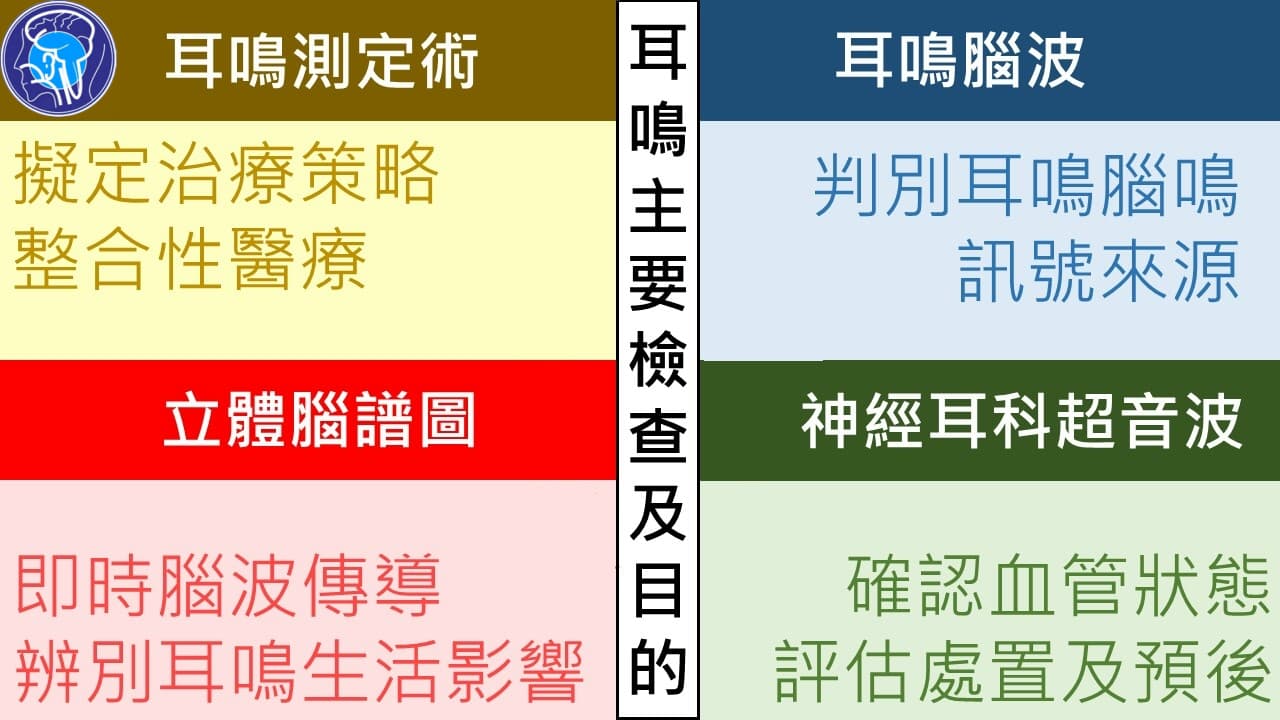
▲Dr. Chien-Chih Chen and Dr. Bing-Tao Tseng emphasize that an accurate diagnosis is the foundation of effective treatment. The image above illustrates the basic process of Yuanjing Clinic's tinnitus assessment program, which integrates expertise across multiple specialties to identify the underlying causes of tinnitus and develop targeted treatment strategies.
Finally, Dr. Chen and Dr. Tseng remind patients not to panic when tinnitus occurs. Seeking appropriate medical evaluation during the optimal treatment window offers the best opportunity for recovery. The Yuanjing medical team is committed to helping every patient overcome tinnitus and return to a peaceful, enjoyable life free from persistent ringing.
To Overcome Tinnitus, You Must First Understand Its Different Types
Tinnitus symptoms can be highly complex. Some people experience a feeling of ear fullness and have difficulty sleeping, while others hear ringing only briefly before it disappears as if nothing happened. Because tinnitus presents differently from person to person, some consider it a serious condition that significantly affects quality of life and should be treated proactively, while others regard it as an occasional "background noise" that can simply be ignored.▲Tinnitus has many possible causes, making diagnosis complicated and often leaving patients unsure which specialist they should consult. (Image source: Freepik)
However, tinnitus specialists Dr. Chien-Chih Chen and Dr. Bing-Tao Tseng believe that every sound has a cause. The body does not produce sounds without a reason. Therefore, whenever you hear sounds that do not originate from the external environment, it is often a sign that something within the body requires attention. The three most common types of tinnitus include:
Compensatory Tinnitus
This type of tinnitus is closely related to hearing function and is sometimes referred to as hearing-loss-related tinnitus. It is called "compensatory" because when the organs responsible for receiving sound signals become impaired or dysfunctional, other parts of the auditory system attempt to compensate for the loss. Hearing impairment or damage to the auditory pathway—such as ear canal obstruction, middle ear fluid accumulation, or dysfunction of the cochlea or auditory nerve—can cause the brain to excessively amplify incoming auditory signals, resulting in tinnitus. A useful analogy is turning up the volume on a radio because the announcer's voice is too quiet. While the desired sound becomes louder, all the background static is amplified as well, producing unpleasant noise.Inflammatory Tinnitus
The second type is inflammatory tinnitus. Why is inflammation related to tinnitus? In most parts of the body, inflammation produces pain signals. However, the cochlea and auditory nerve lack pain receptors. When these structures are irritated by inflammatory substances, such as viral infections or allergens, they cannot generate pain sensations. Instead, they produce warning signals that are perceived as sound. Common conditions associated with inflammatory tinnitus include allergic cochleitis, infectious otitis media, and viral auditory neuritis.Conversion Tinnitus
The third common type is conversion tinnitus, which is closely associated with psychological factors. It is also known as autonomic nervous system-related tinnitus because many affected patients are diagnosed with autonomic nervous system dysfunction. This type of tinnitus is often triggered by chronic stress, frustration, loneliness, or feelings of helplessness. These emotional burdens can produce physiological changes that create persistent neural circuits within the hippocampus, eventually overwhelming the brain's regulatory mechanisms involving the nucleus accumbens. As a result, widespread activation of the cerebral cortex amplifies auditory signals into what is sometimes referred to as "brain tinnitus," often accompanied by anxiety, panic, and insomnia.Dr. Chen and Dr. Tseng emphasize that tinnitus is not limited to these three categories. Based on clinical experience, most patients do not suffer from just one type. Instead, many experience complex tinnitus—a combination of multiple underlying causes. This is especially common in patients who have experienced tinnitus for months or even years, where several contributing factors often overlap.
Which Medical Specialty Should You See for Tinnitus? Here's What the Experts Recommend
Clinical experience shows that one of the biggest reasons tinnitus remains difficult to treat is the challenge of making an accurate diagnosis. During a consultation, patients can only describe their subjective experiences. Consequently, the same patient may receive different assessments at different clinics. As discussed earlier, tinnitus often has multiple contributing factors, and each of these factors adds its own "voice" to the overall symptom, making diagnosis even more complicated.For such a challenging condition, Dr. Chen and Dr. Tseng explain that the key to successfully treating tinnitus is to carefully identify and separate each contributing factor before developing the appropriate treatment strategy. This often requires collaboration among multiple medical specialties, including:
Otolaryngology (ENT)
Conditions such as impacted earwax, middle ear effusion, cochlear disorders, auditory nerve dysfunction, hearing loss, infections of the ear or nasopharynx, otitis media, cochleitis, and viral auditory neuritis are all common causes of tinnitus that fall within the expertise of otolaryngologists. Since tinnitus is often associated with the ears, many patients begin their evaluation with an ENT specialist. However, if the tinnitus originates from other causes, referral to additional specialists may be necessary.Neurology
Another common scenario involves patients whose hearing tests are completely normal but who continue to experience pulsatile tinnitus synchronized with their heartbeat. These patients are often referred to neurologists because the underlying cause may involve vascular abnormalities such as atherosclerosis or muscular tension. Ultrasound examinations are frequently required to identify the true cause.Psychiatry
As mentioned earlier, some forms of tinnitus are closely related to autonomic nervous system dysfunction and psychological stress. In these cases, abnormal brain signaling caused by unresolved emotional stress may result in "brain tinnitus." Psychiatric treatment can therefore play an important role in managing these patients. However, tinnitus is often multifactorial. A patient who initially develops compensatory or inflammatory tinnitus may later experience psychological distress that evolves into conversion tinnitus, making multidisciplinary treatment essential.The specialties described above represent only some of the medical disciplines involved in tinnitus treatment. For patients with particularly complex tinnitus, obtaining appropriate care may require consultations with multiple specialists. Unfortunately, this often leads to frustration, treatment fatigue, and many patients eventually abandon treatment altogether, choosing simply to "live with" their tinnitus.
Is There a Better Way? Recommended Tinnitus Treatment | Yuanjing Clinic
What if the diagnostic process for tinnitus could be streamlined while improving the efficiency of identifying its underlying cause? Dr. Chen and Dr. Tseng explain that because tinnitus often involves multiple medical disciplines, Yuanjing Clinic brings together specialists in otolaryngology, neurology, and psychiatry to provide comprehensive, one-stop multidisciplinary care. This integrated approach allows patients to avoid repeatedly visiting multiple departments while benefiting from individualized treatment strategies designed to achieve better clinical outcomes.▲Dr. Chien-Chih Chen and Dr. Bing-Tao Tseng emphasize that an accurate diagnosis is the foundation of effective treatment. The image above illustrates the basic process of Yuanjing Clinic's tinnitus assessment program, which integrates expertise across multiple specialties to identify the underlying causes of tinnitus and develop targeted treatment strategies.
Finally, Dr. Chen and Dr. Tseng remind patients not to panic when tinnitus occurs. Seeking appropriate medical evaluation during the optimal treatment window offers the best opportunity for recovery. The Yuanjing medical team is committed to helping every patient overcome tinnitus and return to a peaceful, enjoyable life free from persistent ringing.


Prospect Clinic for Prospective Medicine
The original intention of Prospect Clinic for Prospective Medicine was to establish an integrated diagnosis and treatment space that combines otolaryngology and neurology specialties, so that complex tinnitus, dizziness, headaches and auditory nerve-related problems can be more completely evaluated and cared for.


Article Classification
Recent Articles
- What Causes Tinnitus? Finding the Root Cause for Effective Treatment
- Tinnitus after being diagnosed with COVID-19?! What are the causes? How can it be improved?
- Persistent Tinnitus: What You Can Do Before Seeing a Doctor
- What should I do if I have tinnitus? Which specialist should I see for tinnitus? A tinnitus expert will tell you.
- What Causes Tinnitus? Six Common Treatment Options Explained