
 0
0



- Home
- Blog
- Tinnitus column
- Analysis of Six Types of Tinnitus: From Normal Response to Disease Warning Signs, Understand Them All at Once
Analysis of Six Types of Tinnitus: From Normal Response to Disease Warning Signs, Understand Them All at Once
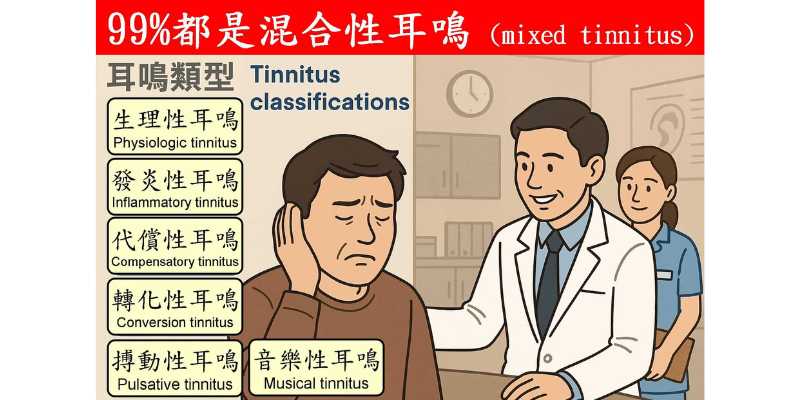
Understanding the Causes and Types of Tinnitus Is the Key to Effective Treatment and Lasting Relief
On a quiet night, you may suddenly hear a "buzzing" or "ringing" sound in your ears and wonder if you have an ear disorder. In fact, tinnitus does not always indicate a disease; it may also be a normal physiological phenomenon. Tinnitus results from abnormal processing of auditory signals within the hearing system. Because its causes and classifications are diverse, treatment is often ineffective without an accurate diagnosis. Below are the six most common types of tinnitus encountered in clinical practice to help readers better understand the condition and receive appropriate treatment.
Type 1: Physiological Tinnitus
This is a normal phenomenon that can occur even in healthy individuals. In an extremely quiet, soundproof environment, such as a double-walled soundproof booth, some people may hear sounds generated by their own bodies. This occurs because the outer hair cells of the cochlea make subtle spontaneous movements in an attempt to "search" for sound when no external sound stimuli are present. This type of tinnitus usually lasts only a few seconds and is considered a normal part of auditory function, requiring no treatment.
Type 2: Inflammatory Tinnitus
This type is commonly associated with otitis media, viral labyrinthitis, or chronic temporal bone inflammation. Infection or tissue swelling damages the hair cells, causing them to generate abnormal electrical signals. Patients with inflammatory tinnitus should undergo hearing tests and imaging studies as early as possible and receive appropriate anti-inflammatory treatment to prevent further deterioration.
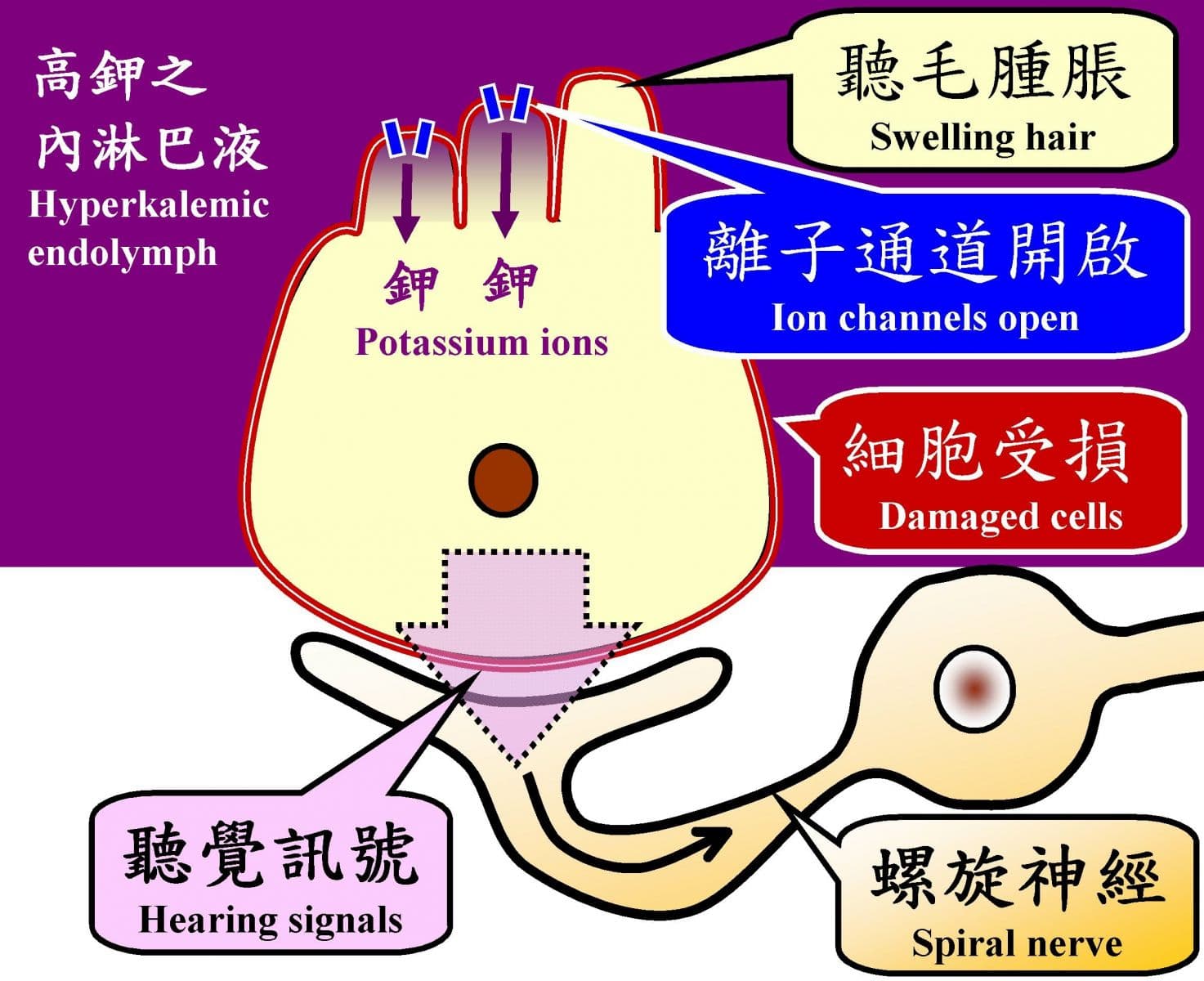
▲ Mechanism of tinnitus caused by hair cell damage. The condition results from persistent opening of ion channels at the tips of cochlear hair cells. (Illustration by Dr. Chien-Chih Chen. Shared in Good Health Science: Tinnitus, Sound Sensitivity, and Echoes May Indicate Cochlear Disorders.)
Type 3: Compensatory Tinnitus
This type commonly occurs in people with hearing loss or long-term exposure to loud noise. When the ears no longer receive complete sound input, the brain automatically amplifies the remaining signals, resulting in the perception of tinnitus. Early use of hearing aids to restore auditory input can often improve symptoms naturally.
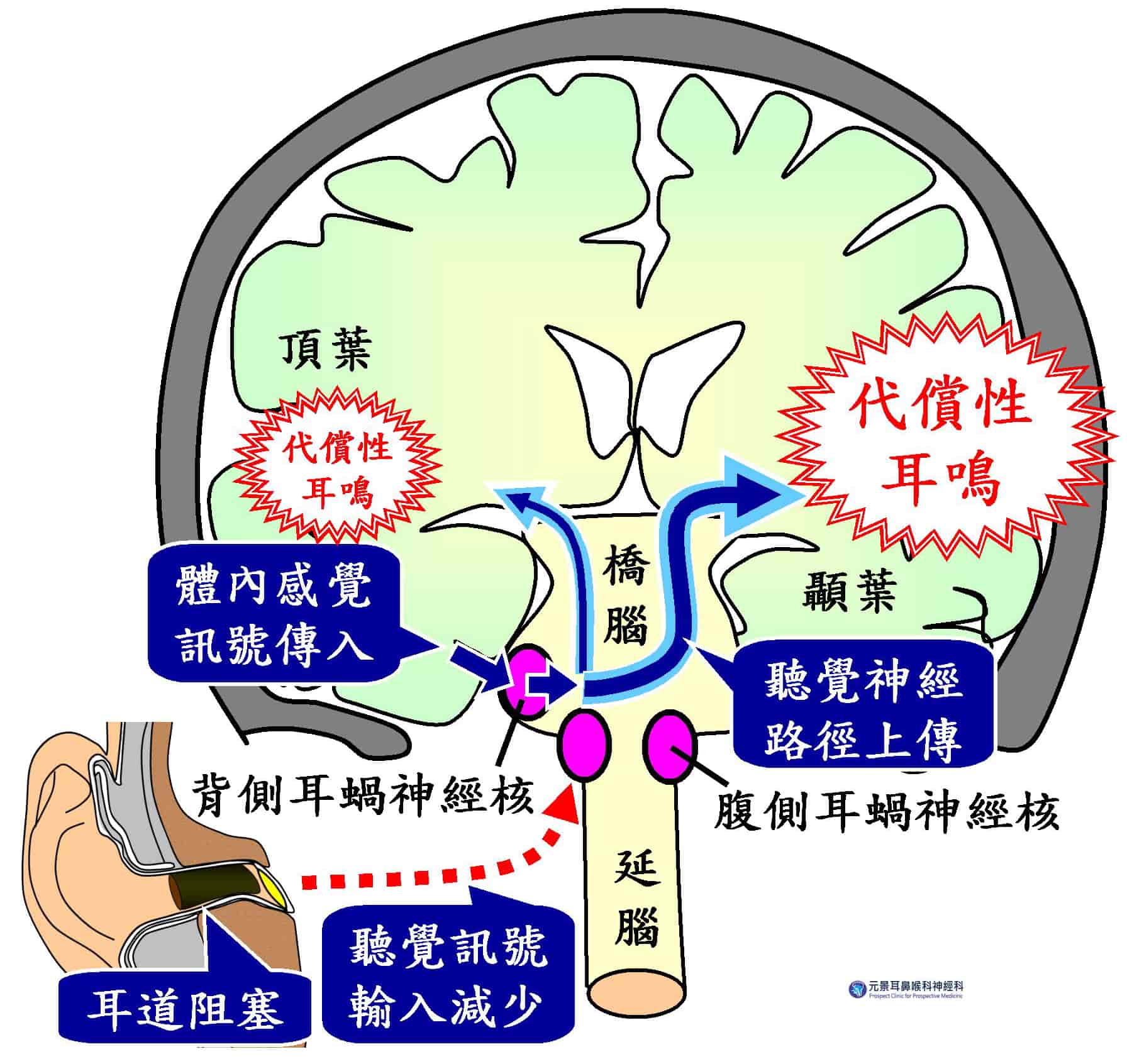
▲ Illustration of the mechanism of compensatory tinnitus caused by ear canal obstruction. (Illustration by Dr. Chien-Chih Chen. Shared in Health News: Woman Heard a Motor-Like Noise in Her Head—Ear Canal Fungal Infection Was the Cause.)
Type 4: Conversion Tinnitus (Brain Tinnitus)
This type is commonly seen in individuals experiencing excessive stress, anxiety, insomnia, or autonomic nervous system dysfunction. Auditory signals are incorrectly transmitted to brain regions responsible for emotion and memory, creating a vicious cycle. Treatment may combine psychological counseling with neuromodulating medications to improve autonomic nervous system function.
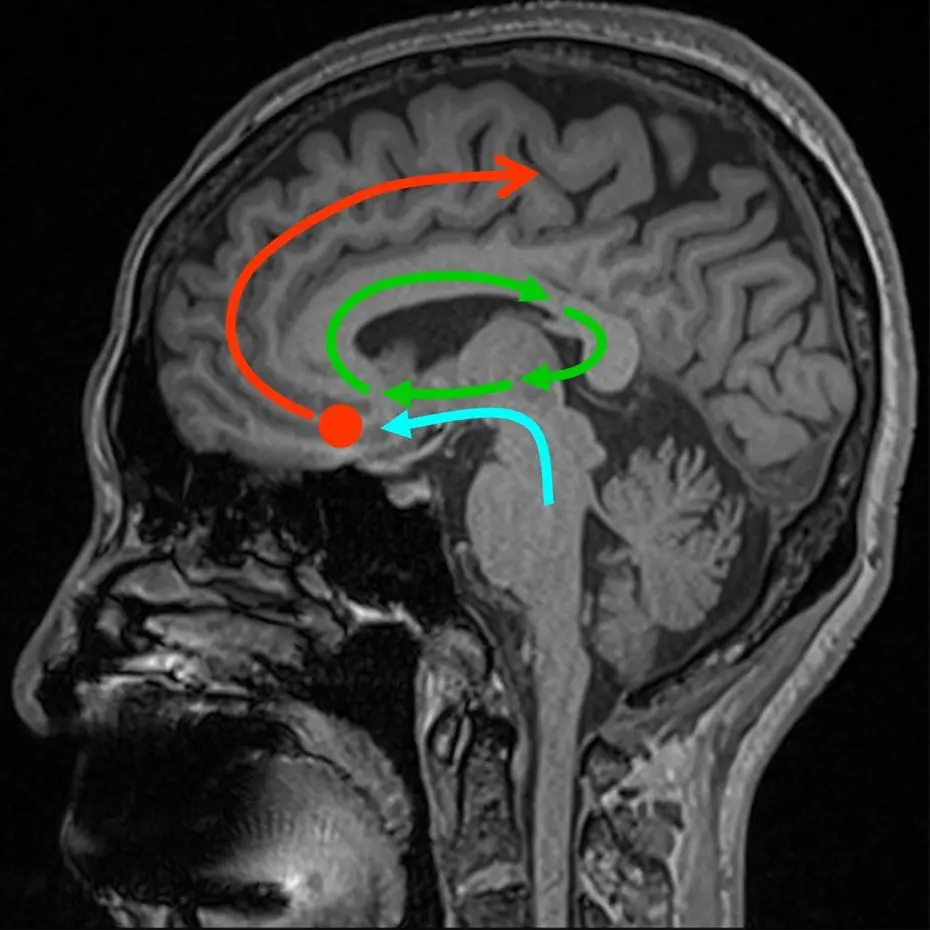
▲ Neural pathways involved in the development of brain tinnitus. The blue pathway represents the auditory pathway in the brainstem, the green pathway represents the addiction circuit within the hippocampus, and the red pathway illustrates how brain tinnitus spreads to other brain regions after it develops. (Illustration by Dr. Chien-Chih Chen. Shared in Can Tinnitus Become Addictive? Beware of Progression to Brain Tinnitus.)
Type 5: Pulsatile Tinnitus
Pulsatile tinnitus occurs when the tinnitus synchronizes with the heartbeat. It is usually caused by abnormal blood flow, such as carotid artery aneurysms, arteriovenous malformations, or blood vessels compressing the auditory nerve. Magnetic resonance imaging (MRI) or vascular imaging is recommended as early as possible, with referral to a neurosurgeon when necessary.
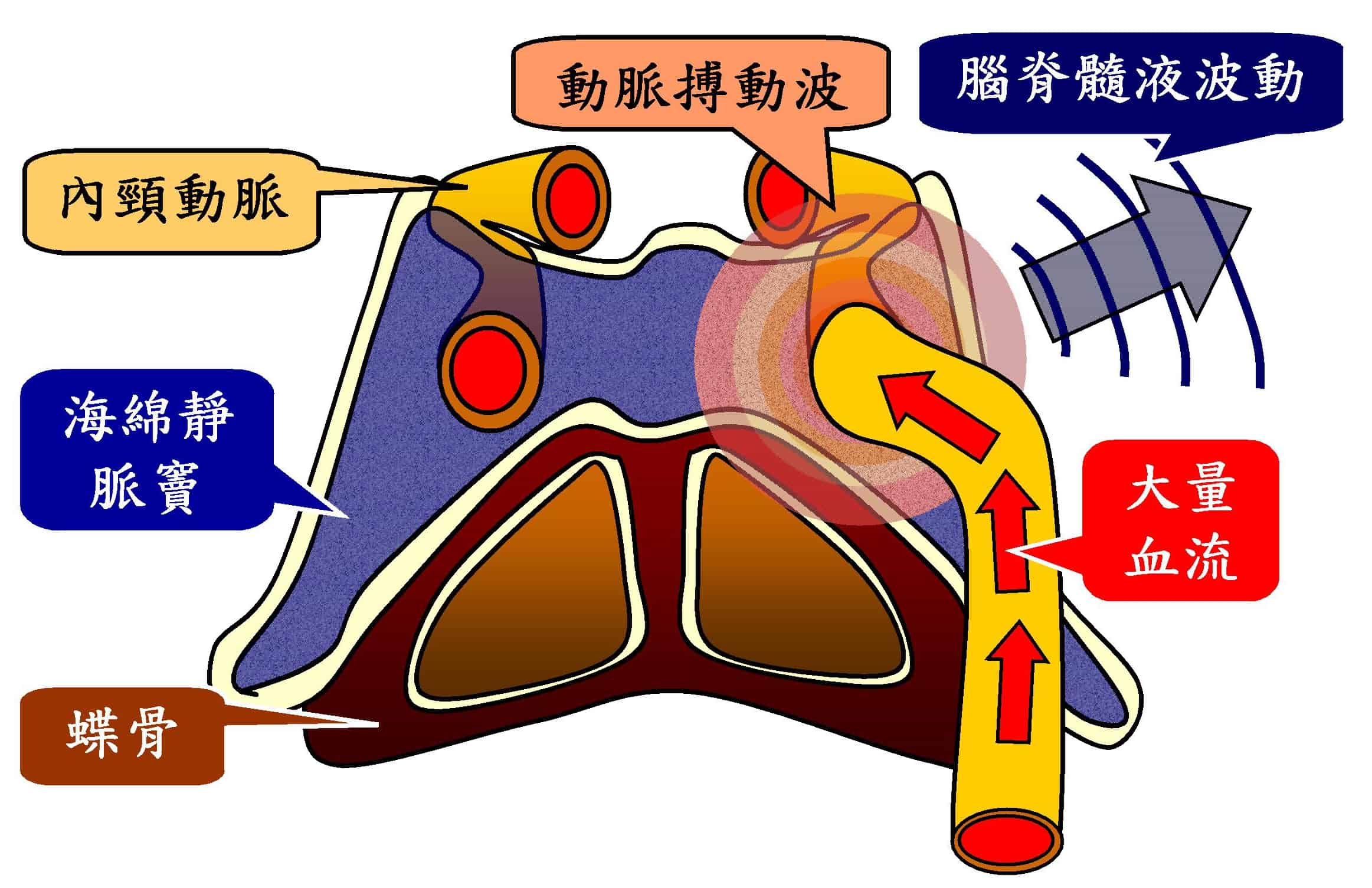
Type 6: Musical Tinnitus
Patients hear melodies or songs that seem to originate within the ears, especially in quiet environments. This condition most commonly affects older adults, individuals with hearing impairment, or those with mild dementia. It results from inappropriate replay of memory-related auditory signals by the auditory cortex. Treatment options may include hearing aids and medications such as acetylcholinesterase inhibitors.
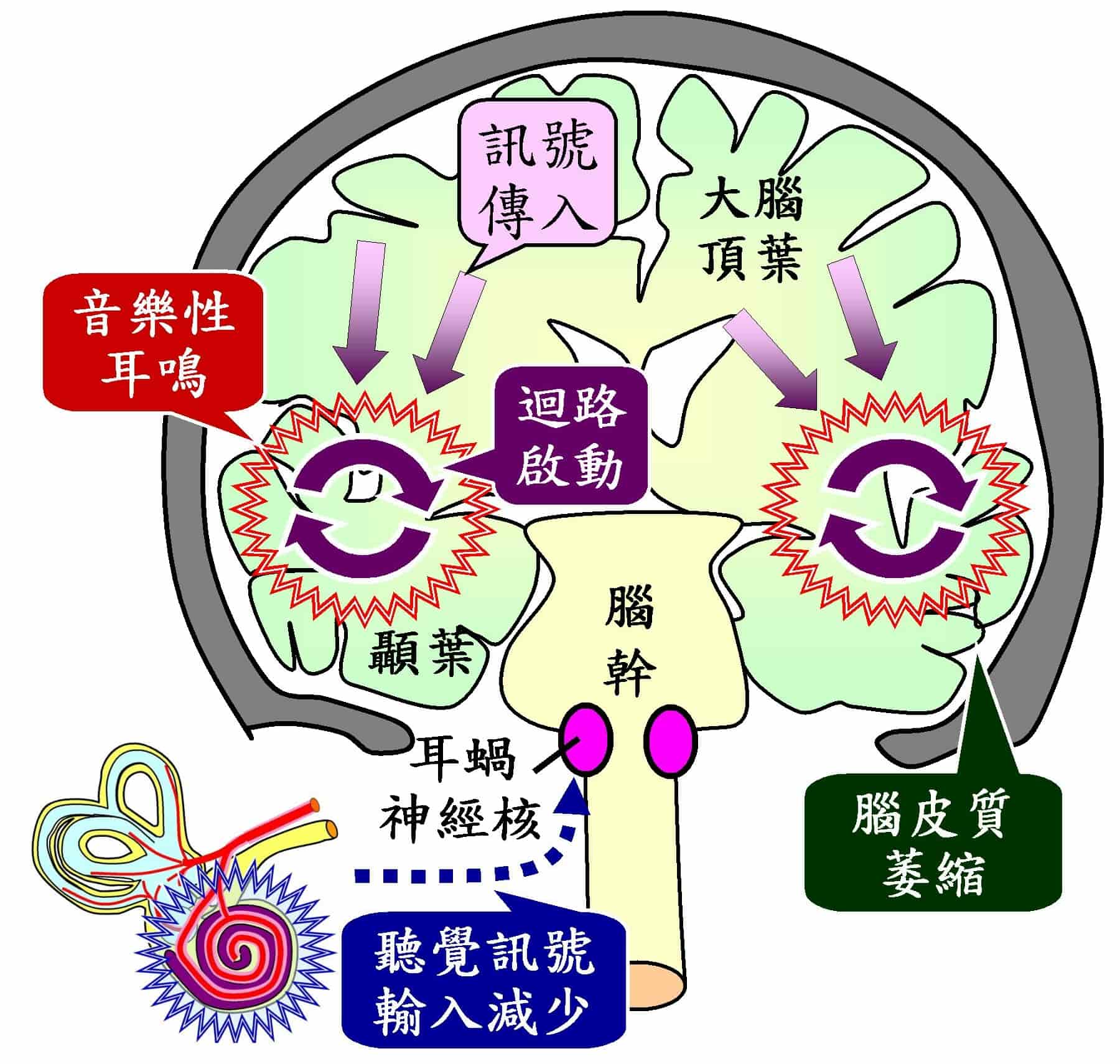
▲ Illustration of the mechanism underlying musical tinnitus. (Illustration by Dr. Chien-Chih Chen. Shared in Expert Consultation: Frequently Hearing Familiar Melodies? It May Be an Early Sign of Dementia.)
99% of Cases Are Mixed Tinnitus
It is important to note that many patients have mixed tinnitus, meaning two or more mechanisms coexist—for example, compensatory tinnitus combined with conversion tinnitus. Therefore, treatment should not rely on a single approach. Instead, individualized management should be developed through multidisciplinary evaluation by specialists in otolaryngology, neurology, and other relevant fields.
In summary, tinnitus is not always a disease and may simply represent a normal physiological response (physiological tinnitus). However, when tinnitus becomes frequent, persistent, or is accompanied by other symptoms, the underlying cause should be carefully investigated. Early hearing examinations and imaging studies are recommended to ensure accurate diagnosis and targeted treatment, ultimately providing effective and lasting relief from tinnitus.
```

Prospect Clinic for Prospective Medicine
The original intention of Prospect Clinic for Prospective Medicine was to establish an integrated diagnosis and treatment space that combines otolaryngology and neurology specialties, so that complex tinnitus, dizziness, headaches and auditory nerve-related problems can be more completely evaluated and cared for.


Article Classification
Recent Articles
- Why Isn't Ginkgo Helping Your Tinnitus?
- Analysis of Six Types of Tinnitus: From Normal Response to Disease Warning Signs, Understand Them All at Once
- Why can’t tinnitus be treated with medication alone?
- The more advanced the equipment, the better the medical treatment? Solving common myths about Taiwanese patients
- Tinnitus is not a hallucination! EEG reveals the brain's distress signals.