
 0
0



BLOG
Health Insights & Articles
- Home
- Blog
- Tinnitus column
- Tinnitus is not a hallucination! EEG reveals the brain's distress signals.
Tinnitus is not a hallucination! EEG reveals the brain's distress signals.
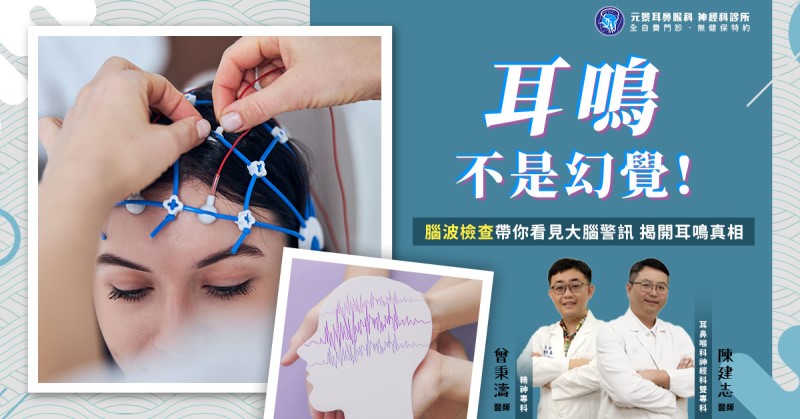
"Buzzing," "ringing," "hissing," "electrical noise"... are these sounds that only you can hear actually real?
According to statistics, about one in every ten people worldwide has experienced tinnitus. For some, it is temporary; for others, it becomes a long-term condition that affects concentration, sleep, and even emotional well-being.
Tinnitus was once thought to be caused primarily by problems within the ear itself, such as damage to the cochlea or auditory nerve. However, recent research has shown that tinnitus is closely related to how the brain processes sound. These sounds are not hallucinations, but rather internal neural signals generated by the brain in the absence of external sound stimulation.
Today, with diagnostic tools such as electroencephalography (EEG), physicians can observe changes in brain activity associated with tinnitus, helping patients better understand its true origin.
Studies have shown that the auditory cortex in people with tinnitus may exhibit abnormal activation while processing sound signals. These changes can be detected through brain wave testing. For example, some patients demonstrate increased activity in specific brain wave patterns, such as beta (β) waves, which may be associated with the brain's attempt to compensate for missing auditory input through excessive neural activation.
Dr. Chien-Chih Chen, a specialist in both otolaryngology and neurology, explains that brain signal analysis can provide preliminary insights into whether tinnitus is more likely related to abnormalities in the ear's structure, imbalances in the brain's auditory signal processing, or stress- and autonomic nervous system-related responses. These objective findings allow physicians to better understand the characteristics and impact of tinnitus, serving as valuable references for developing appropriate treatment strategies.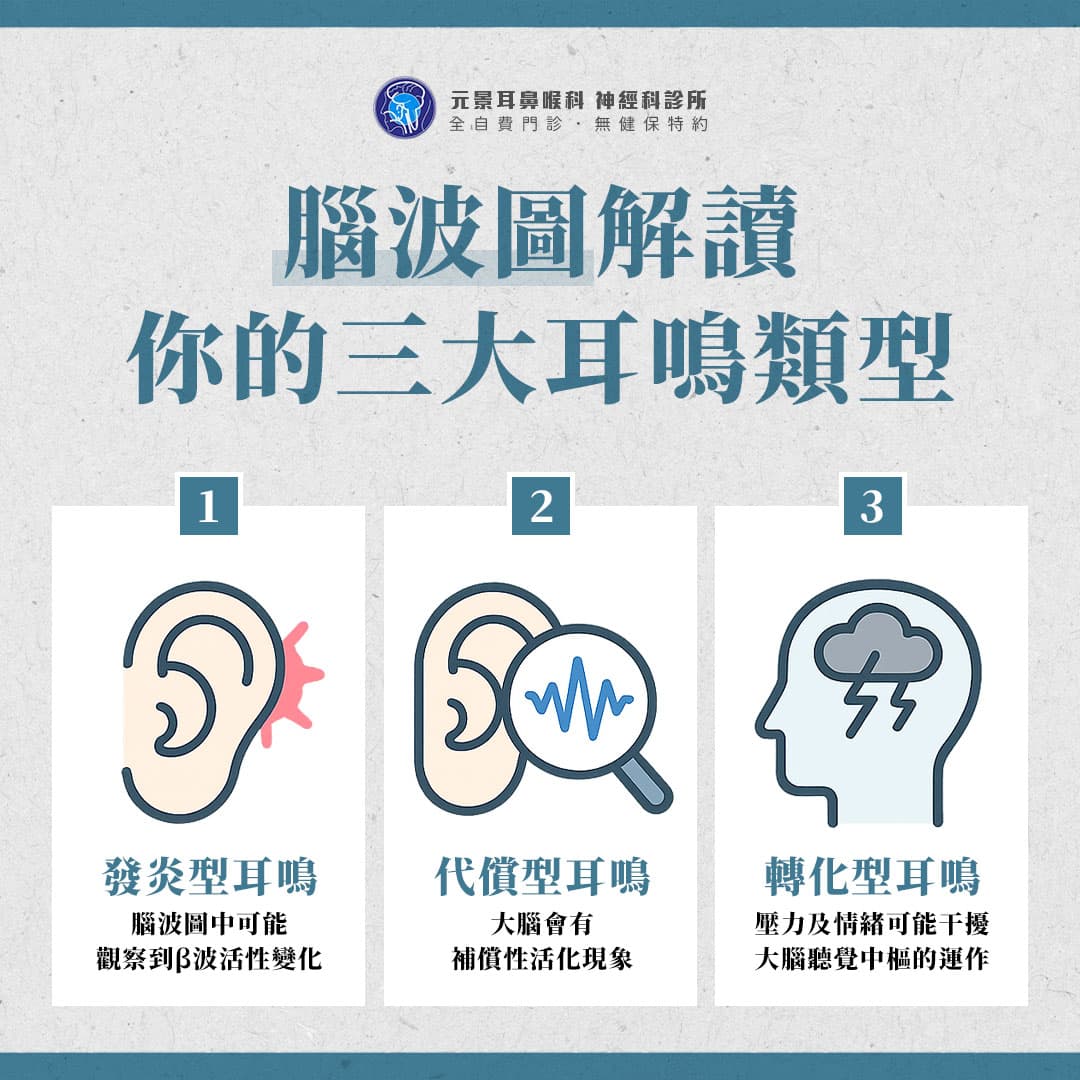
Behind tinnitus lies a variety of brain activity patterns. By observing changes in neural activity through brain wave testing, physicians can better understand the characteristics and possible differences among various types of tinnitus.
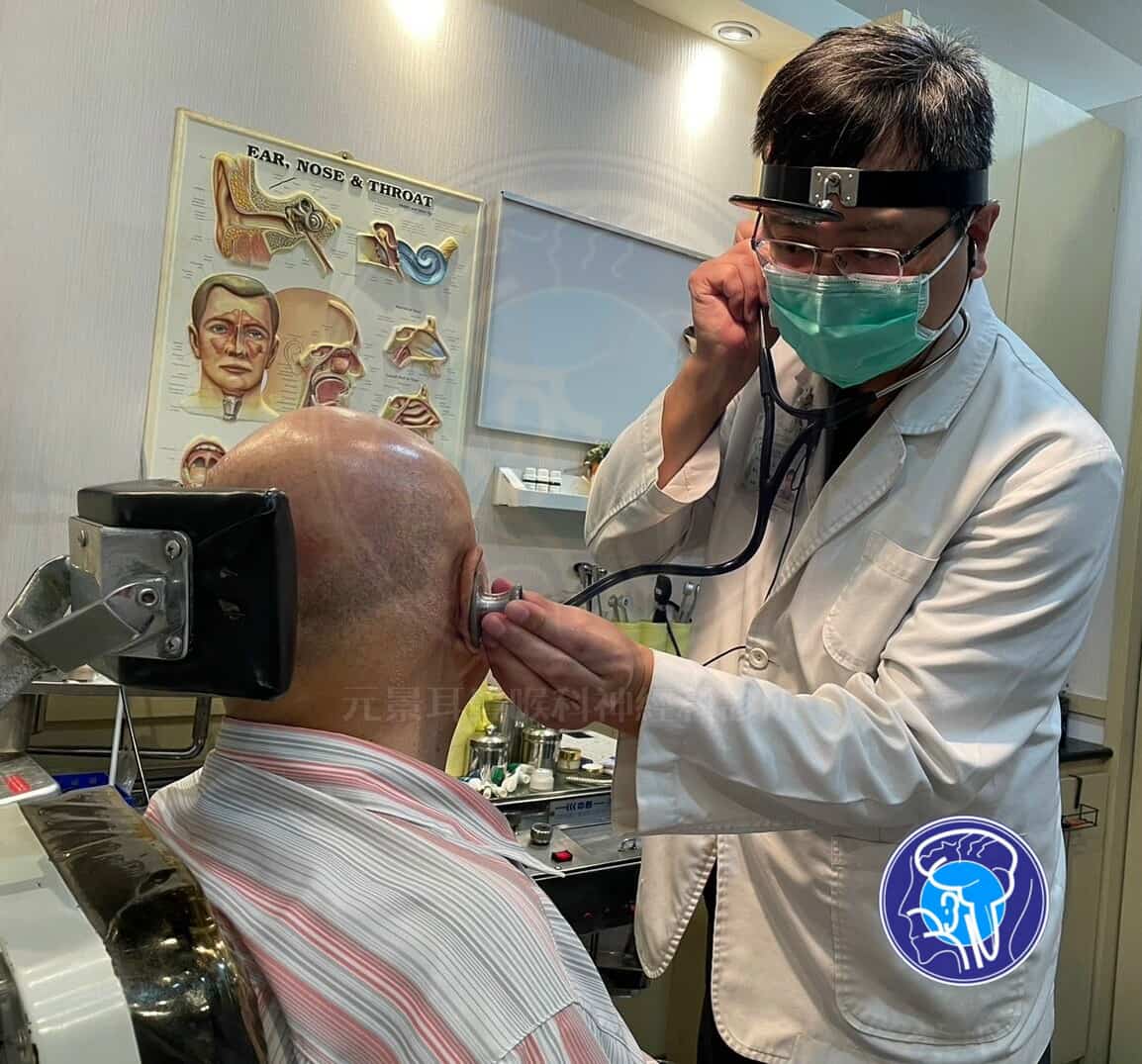
▲Dr. Chien-Chih Chen examining a patient with tinnitus.
To avoid this situation, Yuanjing Clinic provides comprehensive evaluations for patients with tinnitus. These assessments include examinations of ear structure and hearing function by otolaryngologists, brain wave analysis by neurologists to evaluate abnormalities in neural signal processing, and psychiatric assessments to determine whether emotional stress or autonomic nervous system dysfunction may be contributing factors. Through this multidisciplinary approach, physicians can more accurately identify the possible causes of tinnitus and develop individualized management plans.
Dr. Chien-Chih Chen points out that many patients do not initially realize that tinnitus may be related to the brain's sound-processing mechanisms, resulting in delayed evaluation and treatment. In reality, timely and appropriate examinations can often reduce the impact of tinnitus and help prevent it from continuously disrupting daily life. Dr. Bing-Tao Tseng also reminds patients that when tinnitus is intertwined with emotional stress, suppressing or ignoring it over the long term may lead to an ongoing cycle of physical and mental exhaustion. Seeking professional evaluation and support is therefore strongly recommended.
If you or someone you know is experiencing tinnitus and its associated challenges, consider it your body's call for help. Early multidisciplinary evaluation can help identify the underlying cause and pave the way toward a quieter and more comfortable life.
According to statistics, about one in every ten people worldwide has experienced tinnitus. For some, it is temporary; for others, it becomes a long-term condition that affects concentration, sleep, and even emotional well-being.
Tinnitus was once thought to be caused primarily by problems within the ear itself, such as damage to the cochlea or auditory nerve. However, recent research has shown that tinnitus is closely related to how the brain processes sound. These sounds are not hallucinations, but rather internal neural signals generated by the brain in the absence of external sound stimulation.
Today, with diagnostic tools such as electroencephalography (EEG), physicians can observe changes in brain activity associated with tinnitus, helping patients better understand its true origin.
What Is a Brain Wave Test? Revealing the Truth Behind Tinnitus
Brain wave examinations, including electroencephalography (EEG) and magnetoencephalography (MEG), have traditionally been used to evaluate conditions such as epilepsy and sleep disorders. As tinnitus research has advanced, these technologies are now also used to observe the brain's neural responses associated with tinnitus.Studies have shown that the auditory cortex in people with tinnitus may exhibit abnormal activation while processing sound signals. These changes can be detected through brain wave testing. For example, some patients demonstrate increased activity in specific brain wave patterns, such as beta (β) waves, which may be associated with the brain's attempt to compensate for missing auditory input through excessive neural activation.
Dr. Chien-Chih Chen, a specialist in both otolaryngology and neurology, explains that brain signal analysis can provide preliminary insights into whether tinnitus is more likely related to abnormalities in the ear's structure, imbalances in the brain's auditory signal processing, or stress- and autonomic nervous system-related responses. These objective findings allow physicians to better understand the characteristics and impact of tinnitus, serving as valuable references for developing appropriate treatment strategies.
Three Types of Tinnitus: Understanding the "Sound Code" Through Brain Wave Testing
Behind tinnitus lies a variety of brain activity patterns. By observing changes in neural activity through brain wave testing, physicians can better understand the characteristics and possible differences among various types of tinnitus.
Inflammatory Tinnitus: A Warning Sign of Ear or Nerve Disorders
This type is commonly associated with acute otitis media, allergies, or viral infections. Patients often experience ear pain, dizziness, and even difficulty sleeping due to nighttime tinnitus. Brain wave testing may reveal changes in β wave activity. Relying solely on pain relievers or sleeping medications may provide only temporary relief, while treatment should focus on addressing the underlying inflammation.Compensatory Tinnitus: The Brain's Response to Hearing Loss
When hearing declines, the brain automatically amplifies incoming signals in an attempt to compensate for the missing auditory input. However, excessive amplification may cause background noise to be misinterpreted as meaningful sound, creating the perception of tinnitus. This type is more common among older adults and individuals with prolonged noise exposure. Brain wave testing may reveal compensatory activation within the brain. Early intervention, such as hearing rehabilitation or the use of hearing aids, may significantly improve symptoms.Stress-Related (Conversion) Tinnitus: When Stress and Emotions Manifest as Sound
Some patients have completely normal ear examinations yet continue to hear persistent sounds. Psychiatrist Dr. Bing-Tao Tseng explains that this type of tinnitus is often closely associated with anxiety and stress. Prolonged emotional tension may interfere with the interaction between the brain's auditory centers and emotion-regulating regions, ultimately manifesting as tinnitus. In such cases, medication alone is often insufficient. Comprehensive care, including psychological support, sleep improvement, and stress management, is typically recommended.The Key to Treatment: Identify the Cause Before Seeking Improvement
The differences among these types of tinnitus highlight why an accurate diagnosis is often more important than treatment itself. Without first identifying the underlying cause, patients may undergo multiple treatments with little noticeable improvement.▲Dr. Chien-Chih Chen examining a patient with tinnitus.
To avoid this situation, Yuanjing Clinic provides comprehensive evaluations for patients with tinnitus. These assessments include examinations of ear structure and hearing function by otolaryngologists, brain wave analysis by neurologists to evaluate abnormalities in neural signal processing, and psychiatric assessments to determine whether emotional stress or autonomic nervous system dysfunction may be contributing factors. Through this multidisciplinary approach, physicians can more accurately identify the possible causes of tinnitus and develop individualized management plans.
View Tinnitus as Your Body's Call for Help
Tinnitus is neither a simple auditory illusion nor a condition that must simply be endured. In many cases, these sounds are signs that the brain or body is sending abnormal signals. Through diagnostic tools such as brain wave testing for tinnitus, physicians can more quickly and accurately determine the underlying cause, providing a stronger foundation for effective treatment.Dr. Chien-Chih Chen points out that many patients do not initially realize that tinnitus may be related to the brain's sound-processing mechanisms, resulting in delayed evaluation and treatment. In reality, timely and appropriate examinations can often reduce the impact of tinnitus and help prevent it from continuously disrupting daily life. Dr. Bing-Tao Tseng also reminds patients that when tinnitus is intertwined with emotional stress, suppressing or ignoring it over the long term may lead to an ongoing cycle of physical and mental exhaustion. Seeking professional evaluation and support is therefore strongly recommended.
If you or someone you know is experiencing tinnitus and its associated challenges, consider it your body's call for help. Early multidisciplinary evaluation can help identify the underlying cause and pave the way toward a quieter and more comfortable life.


Prospect Clinic for Prospective Medicine
The original intention of Prospect Clinic for Prospective Medicine was to establish an integrated diagnosis and treatment space that combines otolaryngology and neurology specialties, so that complex tinnitus, dizziness, headaches and auditory nerve-related problems can be more completely evaluated and cared for.


Article Classification
Recent Articles
- Why Isn't Ginkgo Helping Your Tinnitus?
- Analysis of Six Types of Tinnitus: From Normal Response to Disease Warning Signs, Understand Them All at Once
- Why can’t tinnitus be treated with medication alone?
- The more advanced the equipment, the better the medical treatment? Solving common myths about Taiwanese patients
- Tinnitus is not a hallucination! EEG reveals the brain's distress signals.