
 0
0



- Home
- Blog
- Tinnitus column
- Don't Let Dizziness Ruin Your Trip
Don't Let Dizziness Ruin Your Trip
Yahoo News and PChome News simultaneously featured this article in the Renowned Doctors Forum.
Taiwan Times and China Daily News also interviewed Dr. Chen regarding this topic.By Dr. Chien-Chih Chen, ENT & Neurology Specialist
In our dizziness clinic, we occasionally see patients who develop vertigo while traveling abroad. Many initially assume that their symptoms are caused by unfamiliar food, jet lag, or even supernatural causes. As a result, they experience unsteady walking, dizziness with movement, nausea, vomiting, loss of appetite despite delicious local cuisine, and no interest in sightseeing, turning the entire trip into an unpleasant experience. In reality, the following medical conditions should be considered.
1. Benign Paroxysmal Positional Vertigo (BPPV)
Patients with pre-existing upper respiratory allergies may have excessive histamine circulating to the utricle, resulting in poor-quality otolithic membrane formation. As a result, the otoconia cannot remain firmly attached. During travel, continuous body movements while riding in vehicles may cause the otoconia to become dislodged and enter one of the semicircular canals. When the head turns or body position changes, the displaced otoconia continue to move the endolymph, triggering nystagmus and vertigo.
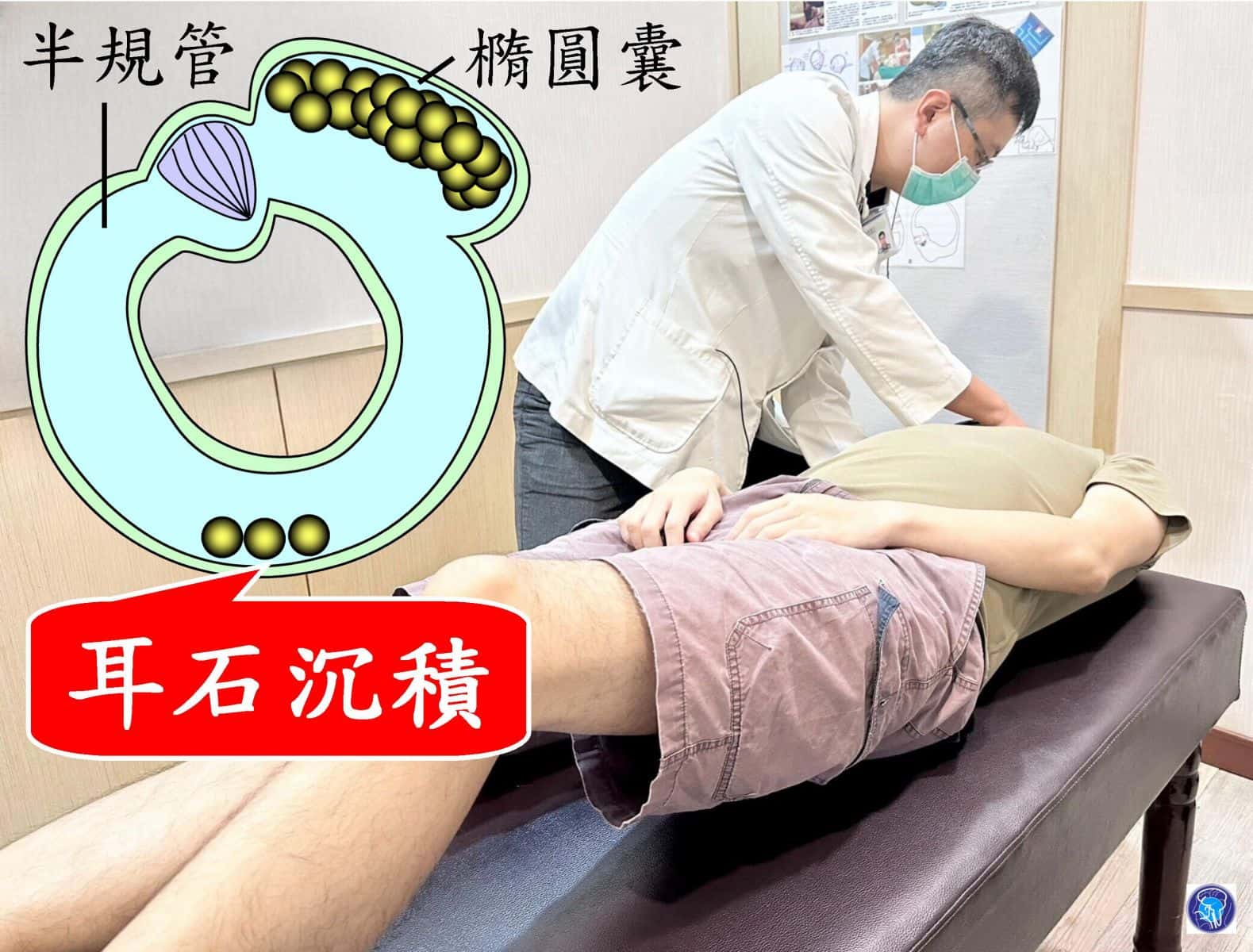
Figure: A physician examining a traveler with vertigo and confirming a diagnosis of benign paroxysmal positional vertigo (BPPV).
2. Vestibular Migraine
Individuals with a predisposition to migraine may develop vestibular migraine after alcohol consumption, sleep deprivation, or fatigue. Electrical activity originating in the brainstem passes through the vestibular nuclei, producing vertigo before spreading to the cerebral cortex and triggering headache. Symptoms often last throughout the day and are frequently accompanied by intolerance to odors, bright lights, loud noises, and motion during travel.
3. Earwax Impaction
This commonly occurs after showering at a hotel or soaking in a hot spring. Water enters the external ear canal, causing earwax to absorb moisture and swell. Once outdoors, particularly in colder climates, differences in air temperature between the two ears may produce a caloric effect (temperature-induced vestibular stimulation), resulting in dizziness.
4. Vestibular Stroke
During long-distance travel, some people intentionally reduce their water intake to avoid frequent restroom visits. Dehydration increases blood viscosity, which may reduce blood flow or even obstruct the anterior or posterior vestibular arteries. This decreases blood supply to the vestibular semicircular canals, impairs vestibular function, and leads to acute vertigo.
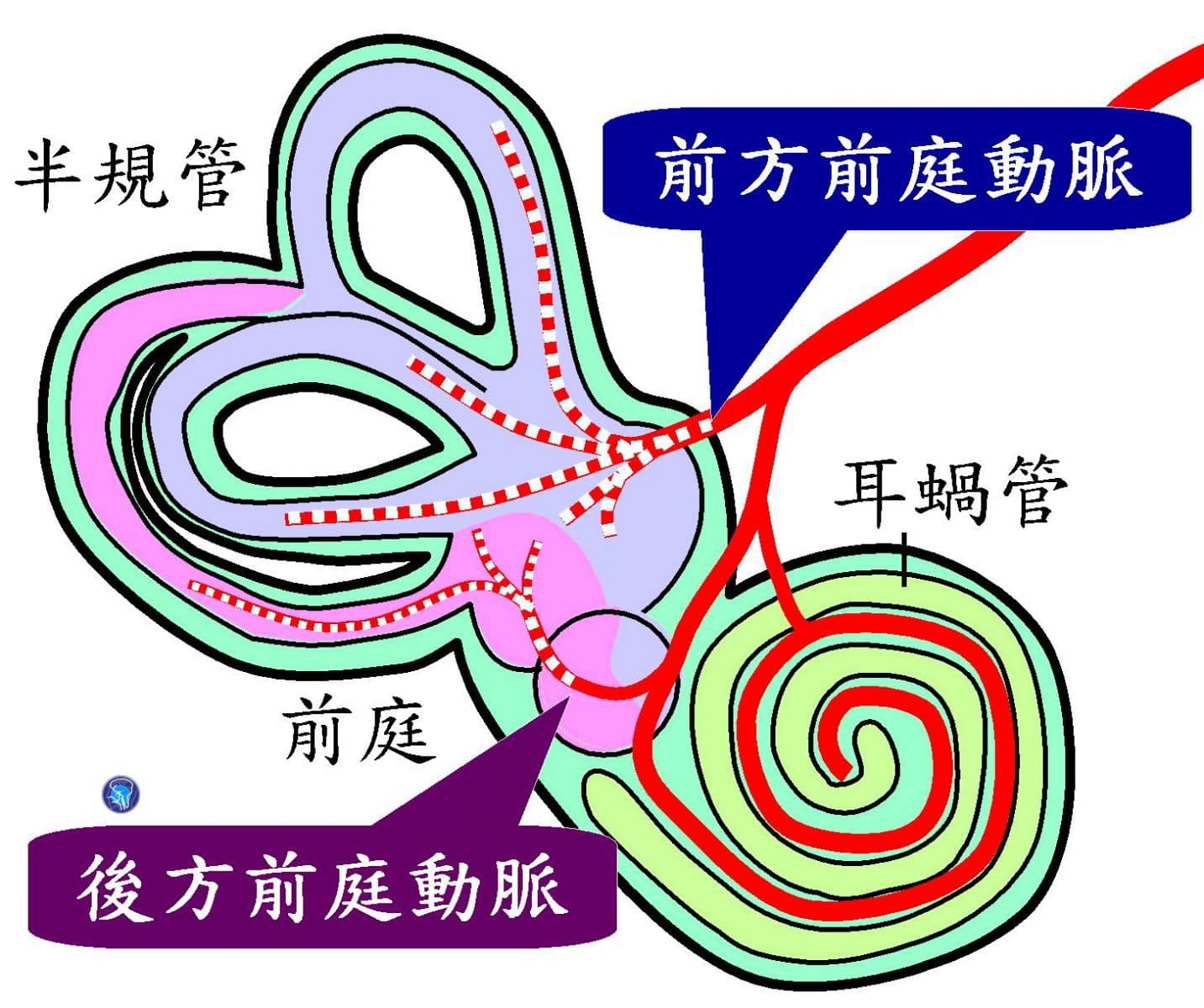
Figure: Obstruction of the anterior or posterior vestibular artery reduces blood flow to the semicircular canals supplied by each artery, leading to impaired vestibular function.
Treatment and Preventive Advice
Before traveling abroad, individuals with upper respiratory allergies should ensure that their allergies are well controlled. Oral antihistamines may be recommended. It is also advisable to visit a nearby clinic before departure to confirm that the external ear canals are free of obstruction.
Patients who have previously experienced vestibular migraine may consider carrying a small supply of a GABA receptor modulator (a Schedule IV controlled medication), along with the original prescription label identifying the medical institution, prescribing physician, and medication name. If symptoms such as anxiety or sleep disturbance occur, taking the prescribed medication promptly may help prevent a migraine attack.
During the trip, drink small amounts of water frequently to reduce the risk of dehydration and vestibular stroke.
If vertigo still develops, an over-the-counter motion sickness medication may provide temporary relief. If symptoms become significantly worse at bedtime, especially when lying flat, benign paroxysmal positional vertigo (BPPV) should be suspected. In this case, sleeping on the less symptomatic side may help. After returning home, seek medical attention promptly, as BPPV can often be effectively treated with a canalith repositioning procedure.



Prospect Clinic for Prospective Medicine
The original intention of Prospect Clinic for Prospective Medicine was to establish an integrated diagnosis and treatment space that combines otolaryngology and neurology specialties, so that complex tinnitus, dizziness, headaches and auditory nerve-related problems can be more completely evaluated and cared for.


Article Classification
Recent Articles
- Why Isn't Ginkgo Helping Your Tinnitus?
- Analysis of Six Types of Tinnitus: From Normal Response to Disease Warning Signs, Understand Them All at Once
- Why can’t tinnitus be treated with medication alone?
- The more advanced the equipment, the better the medical treatment? Solving common myths about Taiwanese patients
- Tinnitus is not a hallucination! EEG reveals the brain's distress signals.